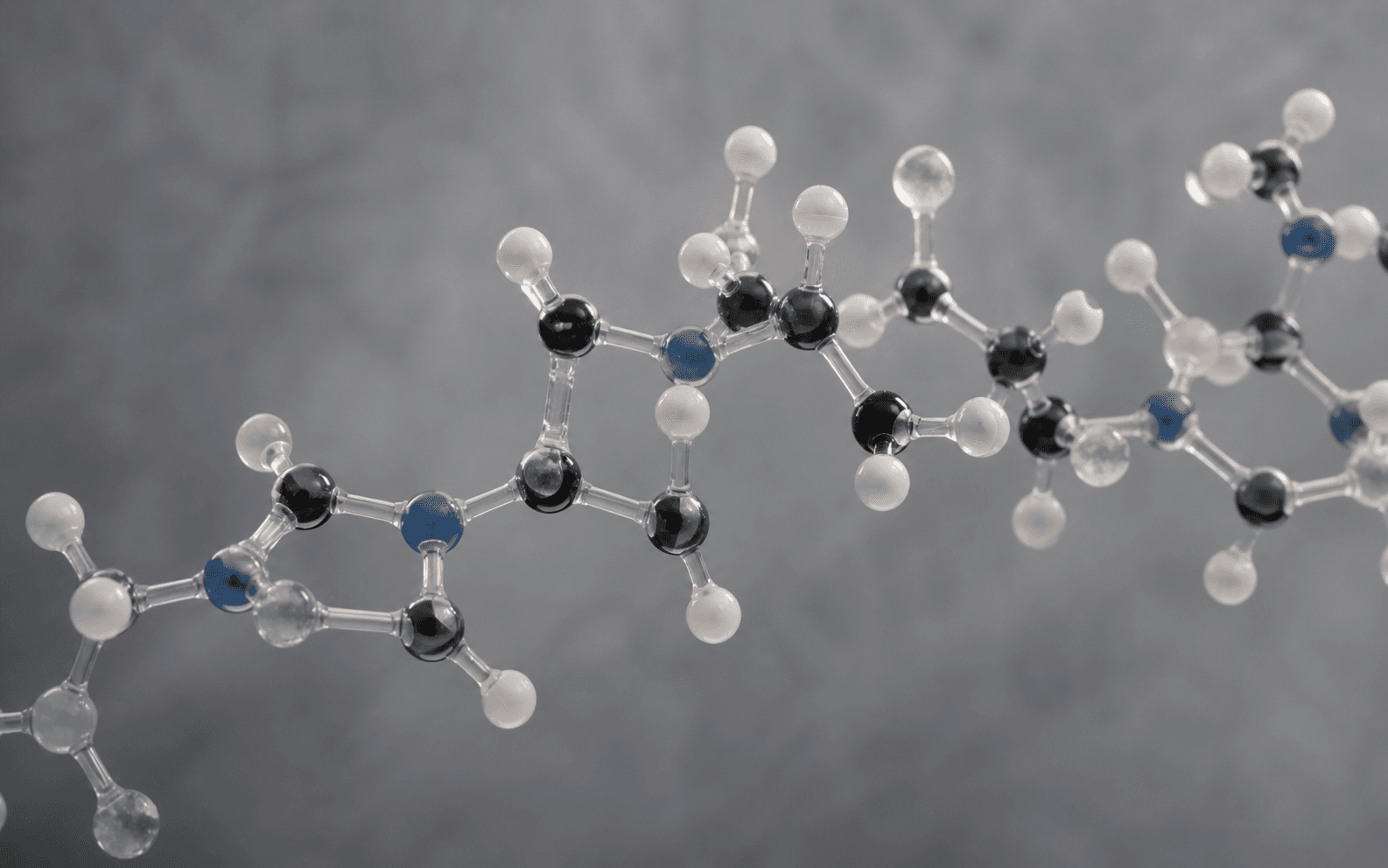
Chemical identity
Every value states its source: database, literature, or calculation. Calculated values are not presented as PubChem data.
| Compound class | Synthetic pentadecapeptide (15 amino acid residues) |
|---|---|
| Synonyms | BPC 157 · PL 14736 · Body Protection Compound 157 |
| Molecular formula | C62H98N16O22PubChem |
| Average molecular mass | 1419.5 г/мольPubChem |
| CAS | 137525-51-0PubChem |
| PubChem CID | 9941957PubChem |
| Chain length | 15 а.о.literature |
| Sequence | GEPPPGKPADDAGLVFormula and average mass were independently recomputed from the sequence shown and matched the PubChem record. |
Where the pairing came from
Both compounds surfaced in the same tissue-repair conversations, each with its own preclinical story. BPC-157: a pentadecapeptide described in rodent models through tissue protection and vessel-formation stimulation. Thymosin β4: a natural actin-binding peptide whose mechanism — directing cell migration toward injury — is mapped in Goldstein's review in Trends in Molecular Medicine.
"Different mechanisms, one goal" sounds elegant, and that's exactly the logic that glued the pair together in folklore. But notice: it's reasoning logic, not an experimental result.
What science says about the combination
Nothing. That's not rhetoric: published studies of BPC-157 and TB-500 used together — zero. Even in animal models the combination hasn't been systematically studied. Each compound has its own preclinical literature; their sum is pure extrapolation.
A separate confusion is TB-500 itself: the market name doesn't determine the molecule, which may be full-length thymosin β4 or a fragment of it. We have a dedicated breakdown of that terminology pit — read it before reading anything else about "TB-500".
Where we stand
We publish no protocols or regimens — not for single compounds, and certainly not for combinations the literature hasn't studied. Both materials in the catalogue are research reagents for laboratory work. If your lab studies repair mechanisms, here are two compounds with different mechanistic histories and honest documentation. That is everything that can be said without leaving the data.
References
- Novel Cytoprotective Mediator, Stable Gastric Pentadecapeptide BPC 157. Vascular Recruitment and Gastrointestinal Tract Healing — Current Pharmaceutical Design (PMID 29879879), 2018.
- Thymosin beta4: actin-sequestering protein moonlights to repair injured tissues — Trends in Molecular Medicine (PMID 16099219), 2005.